Unraveling the Code to Digital Security and How to create an safe auto generation pin code

In our ever-evolving digital landscape, the importance of securing our personal information cannot be overstated. One crucial aspect of this security lies in the creation of a strong 6-digit PIN (Personal Identification Number). In this article, we delve into the details of what makes a 6-digit PIN robust and explore the common pitfalls to avoid when setting up this vital layer of protection.
In this article, we delve into the intricacies of what makes a 6-digit PIN robust and explore the common pitfalls to avoid when setting up this vital layer of protection.
Understanding the Significance
Why a 6-Digit PIN Matters
In the realm of digital security, a 6-digit PIN acts as a first line of defense against unauthorized access. Its significance lies in its role as a gatekeeper to sensitive information, making it imperative for users to choose a PIN that can withstand potential threats.
The Consequences of a Weak PIN
Before we explore the characteristics of a strong 6-digit PIN, it’s essential to grasp the repercussions of a weak one. A predictable or easily guessable PIN opens the door for malicious actors to compromise personal data, leading to identity theft, financial loss, and other serious consequences.
Characteristics of a Strong 6-Digit PIN
The foundation of a robust 6-digit PIN lies in its unpredictability. Avoiding common patterns or easily guessable sequences is paramount to ensuring the security of your digital assets.
1. Steering Clear of Date of Birth or Date Format
Choosing a 6-digit PIN that does not mimic date formats, such as DDMMYY, YYMMDD or MMDDYY is crucial. This precautionary measure prevents bad actors from exploiting date-related patterns. Below are the example:-
- Weak PIN: 270688 / 880627 (DDMMYY format for June 27, 1988)
- Strong PIN: 827648 / 82B6A8 (A randomly generated combination with no relation to the user’s birthdate)
2. Avoiding Identification Document Patterns
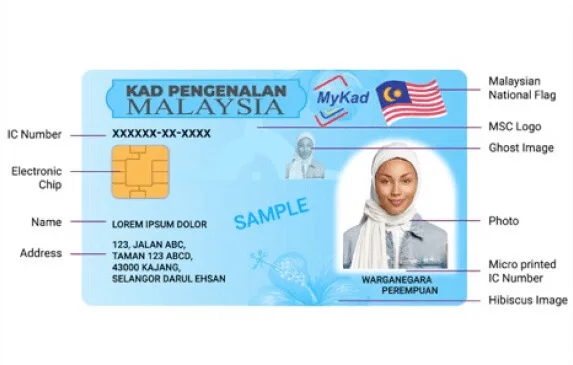
A strong 6-digit PIN should steer clear of any resemblance to identification documents. This includes avoiding the use of the first or last 6 digits of an IC (Identity Card) or passport number, adding an extra layer of security.
For example, according to Malaysian IC, 930622105570 (YYMMDDXXXXXX)
- Weak PIN: 930622 / 105570 (First or Last 6 digits of an IC or passport)
- Strong PIN: 827648 / 82B6A8 (A randomly generated combination unrelated to identification numbers)
3. Guarding Against Mobile Number Matches
To fortify your 6-digit PIN, it is advisable to avoid using sequences that match parts of your mobile number. This simple yet effective strategy reduces the risk of unauthorized access through social engineering.
For example, if the phone number is +60142253434,
- Weak PIN: 253434 / 014225 (Matches part of the mobile number)
- Strong PIN: 917643 / 9X7Y4Z (A randomly generated combination with no direct association with the mobile number)
4. Eliminating Repeated Numbers or Sequences
A strong 6-digit PIN should never succumb to the allure of repeated numbers or easily recognizable sequences. Steer clear of combinations like 111111, 112233, 121212, 123123, or 123456, as they represent low-hanging fruit for those attempting unauthorized access.
- Weak PIN: 112233, 111111, 112233, 121212, 123123, 123456
- Strong PIN: 512932 (A randomly generated non-repeating combination)
5. Avoid Easily Guessed Keypad Patterns:
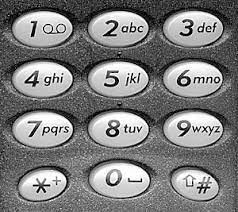
Users are encouraged to steer clear of easily guessed patterns on the keypad. This includes patterns like straight lines, squares, or diagonals, as these can be quickly identified and exploited by attackers.
- Weak PIN: 147258, 159357 (Forms a diagonal on the numeric keypad)
- Strong PIN: 612497 / 9X7Y4Z (A randomly generated combination without an easily identifiable keypad pattern)
Strategies for Auto-Generating Secure 6-Digit PINs
Ensuring the security of auto-generated 6-digit PINs is crucial for systems that provide this service to users. Here are some strategies that can be implemented to generate strong and secure PINs:
1. Randomization:
Use a robust randomization algorithm to generate PINs. This ensures that the resulting PINs are not easily predictable and do not follow any discernible pattern.
2. Exclusion of Common Patterns and Personal Information
Implement rules in the auto-generation algorithm to exclude common patterns and pitfalls, such as repeated numbers, sequential digits, and easily identifiable keypad patterns. Ensure that the auto-generation process does not incorporate any easily obtainable personal information, such as date of birth or identification numbers.
4. Length and Complexity Considerations
Evaluate the possibility of increasing the length of the PIN beyond 6 digits, if feasible. Additionally, consider incorporating a mix of numbers to enhance complexity.
5. Periodic PIN Refresh
Encourage or enforce periodic changes of PINs to mitigate the risk of long-term compromises. This ensures that even if a PIN is somehow compromised, it remains valid for a limited duration.
Auto Generate Pin Number
Here is the code example to generate the Pin Number based on the characteristics of a strong 6-digit PIN.
class PinNumber
{
    /**
     * @throws RandomException
     */
    public function generate($model = null): ?string
    {
        do {
            $pin = str_pad(random_int(0, 999999), 6, '0', STR_PAD_LEFT);
        } while (
            ! $this->hasSequentialPattern($pin) && ! $this->hasDOBPattern($pin) &&
        ! $this->hasICPattern($pin, $model) && ! $this->hasPhoneNumberPattern($pin, $model)
        );

        return $pin;
    }

    /**
     * @param string $pin
     * @param mixed|null $model
     *
     * @return bool
     *
     * Check if the pin has IC pattern
     */
    private function hasICPattern(string $pin, mixed $model = null): bool
    {
        $ic = $model->identity_no ?? null;
        if ( ! $ic) {
            return false;
        }

        return Str::contains($ic, $pin);
    }


    /**
     * @param string $pin
     * @param mixed|null $model
     * @return bool
     *
     * Check if the pin has phone number pattern
     */
    private function hasPhoneNumberPattern(string $pin, mixed $model = null): bool
    {
        $mobile = $model->mobile_phone ?? null;
        if ( ! $mobile) {
            return false;
        }

        return Str::contains($mobile, $pin);
    }

    /**
     * @param string $pin
     * @return bool
     *
     * Check if the pin has DOB pattern
     */
    private function hasDOBPattern(string $pin): bool
    {
        $datePatterns = [
            '/^(0[1-9]|1[0-2])(0[1-9]|[12][0-9]|3[01])(\d{2})$/', // DDMMYY
            '/^(\d{2})(0[1-9]|1[0-2])(0[1-9]|[12][0-9]|3[01])$/', // YYMMDD
            '/^(0[1-9]|1[0-2])(0[1-9]|[12][0-9]|3[01])(\d{2})$/'  // MMDDYY
        ];

        foreach ($datePatterns as $pattern) {
            if (preg_match($pattern, $pin)) {
                return true;
            }
        }
        return false;
    }

    /**
     * @param string $pin
     * @return bool
     *
     * Check if the pin has sequential pattern
     */
    private function hasSequentialPattern(string $pin): bool
    {
        // 000000 - 999999
        if (preg_match('/^(\d)\1{5}$/', $pin)) {
            return true;
        }

        // eg: 112233, 223344, 445566, 778899, etc
        if (preg_match('/(\d)\1(\d)\2(\d)\3/', $pin)) {
            return true;
        }

        // eg: 123456, 234567, 345678, 456789, etc
        if (preg_match('/^(?=\d{6}$)0?1?2?3?4?5?6?7?8?9?0?$/', $pin)) {
            return true;
        }

        // eg: 123123, 234234, 345345, 456456, etc
        if (preg_match('/(\d{3})\1/', $pin)) {
            return true;
        }

        // eg: 121212, 232323, 343434, 454545, etc
        return (bool) (preg_match('/(\d{2})\1\1/', $pin));
    }
}
Above code may be not the optimized solution or the best code prensetation, but it give the idea how to generate the pin number.
Conclusion
Safeguarding our personal information demands proactive measures. Choosing a strong 6-digit PIN is a fundamental step towards fortifying our digital defenses. By understanding the characteristics of a secure PIN and avoiding common pitfalls, users can significantly reduce the risk of unauthorized access and protect their digital identities.
Thank you for reading! Don’t forget to subscribe to stay informed about the latest updates in system design and technical innovations.
If you found this article insightful and want to stay updated with more content on technology trends, be sure to follow me on :-
Twitter: https://twitter.com/hafiqdotcom
LinkedIn: https://www.linkedin.com/in/hafiq93
Buy Me Coffee: https://paypal.me/mhi9388 /
https://buymeacoffee.com/mhitech