Building a Seamless and Scalable Digital Wedding Invitation Platform

Wedding invitations have taken a leap from paper to pixels. An e-invitation system is not only eco-friendly but also provides a seamless way to manage RSVPs, send reminders and even share wedding details with a touch of personalization.
This article will guide you through designing a robust Wedding E-Invitation System, covering everything from requirement gathering to best practices. Let’s dive in!
Disclaimer: The calculations and design presented in this article are estimations and provide a rough design for educational purposes. Actual requirements may vary based on specific use cases, user behavior and system optimizations. It is recommended to conduct detailed analysis and testing tailored to your specific project needs.
Demand Statistics for the Wedding E-Invitation System
Before diving into the design and implementation details, it’s crucial to analyze market demand and trends to ensure that the application is worth the investment. Below are key statistics and insights demonstrating the growing need for a digital solution in the wedding industry:
Market Size and Growth
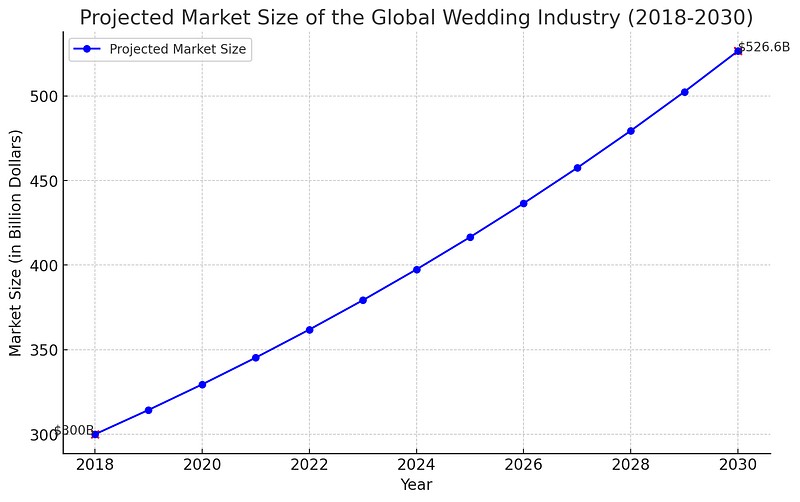
- Global Wedding Industry: The global wedding industry is projected to reach $414 billion by 2030, with a 4.8% CAGR from 2018 to 2030. This growth is driven by increasing disposable incomes, changing social norms, and the rising trend of destination weddings.
- Digital Invitations: The digital invitations market is experiencing significant growth, with an estimated market size of $1.5 billion in 2023. The convenience, cost-effectiveness, and eco-friendliness of digital invitations are key factors driving this trend.
User Preferences and Behavior
- Shift to Digital Invitations: In recent years, there has been a noticeable trend toward digital invitations for weddings. Many couples now prefer the convenience, customization options, and reduced environmental impact offered by digital invites compared to traditional paper invitations.
- Social Media’s Impact: A significant number of engaged couples have found digital invitation services through social media platforms. This highlights the influential role that online channels play in shaping consumer preferences and driving demand for digital wedding invitations. 💌
Cost Savings
- Economic Advantage: On average, paper invitations can cost a couple between $400 and $650, while digital invites typically amount to an average of $100 per couple. This substantial price difference doesn’t even account for the time saved by avoiding packaging and shipping physical invitations. So, if we are looking to save both money and trees, digital invitations are a fantastic choice! 🌿💌
- Reduction in Waste: With growing environmental awareness, couples are increasingly opting for digital invitations to reduce paper waste and carbon footprint.
Competitor Analysis
- Existing Solutions: While there are several digital invitation platforms available, many lack comprehensive features tailored specifically for weddings. Our system aims to fill this gap by offering a holistic solution that includes not only invitations but also event management tools.
- Market Opportunity: The current market is fragmented, with no clear leader dominating the wedding digital invitation space. This presents an opportunity for our system to capture significant market share by offering superior features and user experience.
The demand of online invitation is backed by those market growth, shifting towards digital solutions, significant cost savings and the need for environmentally friendly options. With technological advancements and a clear gap in the market, investing in the development of this system is not only justified but also strategically advantageous.
Requirement Gathering
The first step in designing any system is understanding what it needs to do. This involves gathering both functional and non-functional requirements.
Functional Requirements
- User Registration and Authentication: Users should be able to create accounts and log in securely.
- Invitation Creation and Customization: Users need a variety of templates and customization options (ex: colors, fonts, images).
- Guest Management: Users should be able to import and manage their guest list.
- RSVP Management: Guests should be able to respond to invitations, indicating their attendance.
- Notification System: Send reminders and updates to guests.
- Analytics and Reporting: Provide insights into RSVPs, views and engagement.
- Payment Gateway: If premium templates or features are offered, integrate a secure payment system.
- Social Media Integration: Allow sharing invitations via social media platforms.
Non-Functional Requirements
- Scalability: The system should handle a growing number of users and invitations.
- Performance: Quick load times and seamless user experience.
- Security: Protect user data and ensure secure transactions.
- Availability: Ensure the system is always available, especially during peak times (ex: wedding season).
- Usability: Intuitive and user-friendly interface.
- Compliance: Adhere to data protection regulations (ex: GDPR).
System Methodology
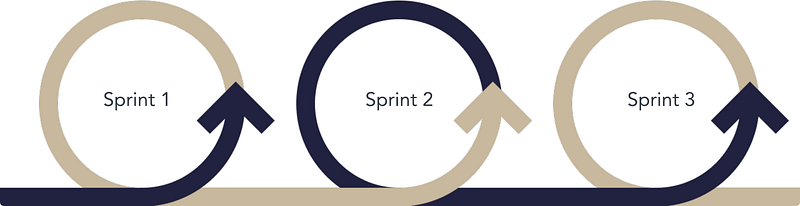
The methodology chosen for developing the agriculture e-commerce system can greatly influence its success. A popular approach is the Agile methodology. Agile focuses on iterative development, where requirements and solutions evolve through collaboration between cross-functional teams. Key benefits of Agile include:
- Flexibility: Ability to adapt to changing requirements and market conditions.
- Continuous Improvement: Regular iterations allow for continuous testing and feedback, improving the system incrementally.
- Customer Collaboration: Engaging stakeholders throughout the development process ensures the final product meets their needs.
In practice, Agile can be implemented using frameworks like Scrum or Kanban, with regular sprints, daily stand-ups and retrospective meetings to keep the project on track.
Data Fact Figure and Calculation
Understanding the data requirements helps in planning the storage and server needs effectively.
Estimated Starting Data Calculation
Let’s start with some assumptions:
- Initial Users: 1000 users
- E-Invitation Cards: Each user creates 1 invitation
- Guests per Invitation: 100 guests
- RSVP Responses: 100 responses per invitation
- Event Details: Each invitation includes 5 details (venue, date, etc.)
Data Breakdown
User Data:
- Size per user: 2 KB
- Total: 1000 * 2 KB = 2 MB
Invitation Data:
- Size per invitation: 10 KB
- Total: 1000 * 10 KB = 10 MB
Guest Data:
- Size per guest: 1 KB
- Total: 1000 * 100 * 1 KB = 100 MB
RSVP Data:
- Size per response: 0.5 KB
- Total: 1000 * 100 * 0.5 KB = 50 MB
Event Details:
- Size per detail: 0.2 KB
- Total: 1000 * 5 * 0.2 KB = 1 MB
Total Data Starting Usage:
2 MB (User Data) + 10 MB (Invitation Data) + 100 MB (Guest Data) + 50 MB (RSVP Data) + 1 MB (Event Details) = 163 MB
Storage Requirement
Storage planning is crucial to handle both current and future data growth.
Storage Types
- Relational Database (RDBMS): Suitable for structured data such as user information, invitations and RSVPs. Examples include MySQL and PostgreSQL.
- Cloud Storage: Ideal for storing large files like images and videos. Examples include AWS S3, Google Cloud Storage and Azure Blob Storage.
Storage Estimation
- Database Storage: 163 MB initially, with a growth rate of 50% annually.
- File Storage: Assuming each invitation has 5 images of 500 KB each, total = 1000 * 5 * 500 KB = 2.5 GB
Server Requirement and Calculation
To ensure the system runs smoothly, estimating the server requirements is essential.
Server Specification
- Web Server: For handling HTTP requests. Example: Nginx, Apache.
- Application Server: For running the business logic. Example: Node.js, Django, Laravel
- Database Server: For storing data. Example: MySQL or PostgreSQL.
Server Calculation
Web Server:
- Initial Traffic: 1000 users, 10 requests per user per day
- Total Requests per Day: 1000 * 10 = 10,000
- Requests per Second: 10,000 / 86400 ≈ 0.12
Application Server:
- Average Processing Time per Request: 200 ms
- Required Instances: (10,000 * 0.2) / 86400 ≈ 0.02
Database Server:
- Read/Write Operations per Day: 20,000
- Required CPU: Quad-core, 16 GB RAM
Notes: Using cloud infrastructure (AWS, Azure, Google Cloud) allows for scalable server resources. Auto-scaling groups can automatically adjust the number of servers based on traffic and usage patterns, ensuring optimal performance and cost efficiency.
High-Level Architecture: Proposed Architecture
Designing the high-level architecture involves creating a blueprint that outlines the system’s components and their interactions. Here’s an example architecture:
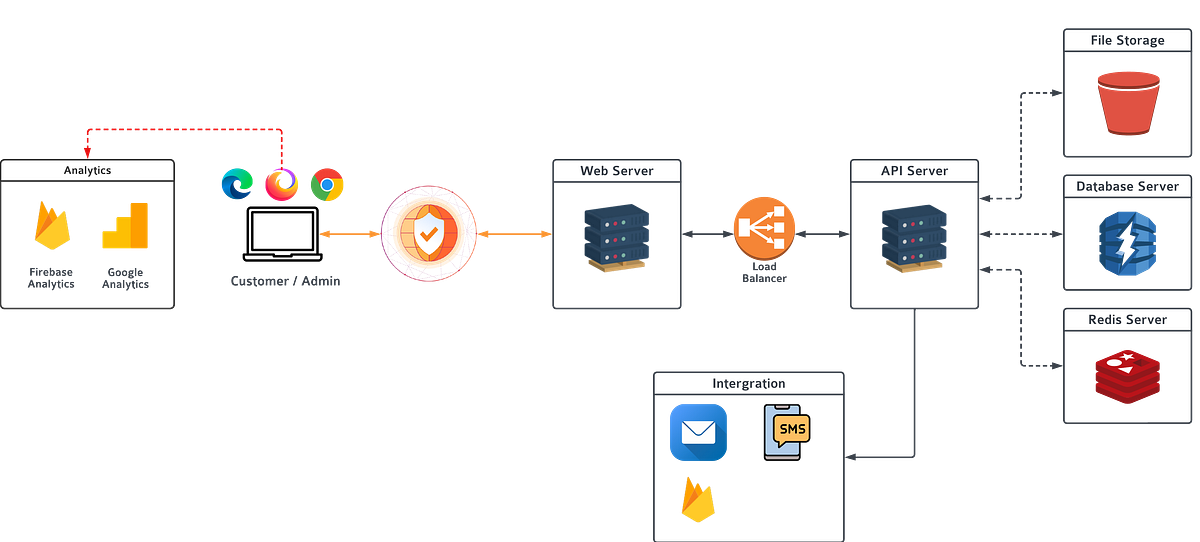
Client-Side (Frontend):
- Technologies: Next.js, Nuxt.js
- Purpose: User interface for designing invitations, managing guests and viewing analytics.
Server-Side (Backend):
- Technologies: Laravel, NestJS, Django
- Purpose: Business logic, API endpoints and server-side processing.
Database:
- Primary Database: MySQL (Relational)
Storage:
- Cloud Storage: AWS S3 for storing images and files.
Load Balancer:
- Example: Nginx
- Purpose: Distribute incoming traffic to multiple servers.
CDN / WAF:
- Example: Cloudflare
- Purpose: Deliver content to users with low latency.
Estimated Project Costs
Development Cost
Development Team: Assuming a team of 2developers and 1 designer.
- Average Developer Salary: $50,000 per year
- Average UIUX Designer Salary: $50,000 per year
- Total Salary Cost: (2 * $50,000 + $50,000) = $150,000
Infrastructure Cost
Servers: Cloud-based servers for hosting web applications, databases and storage.
- Estimated Monthly Cost: $500 (including web servers, application servers, database servers and cloud storage)
Maintenance and Operational Cost
Ongoing Development: Basic updates, bug fixes and feature enhancements.
- Estimated Annual Cost: $5,000
Server Maintenance: Routine monitoring, backups and security updates.
- Estimated Annual Cost: $1,000
Total Estimated Cost
- Initial Development: $150,000 = $150,000
- Infrastructure: $500 * 12 = $6,000
- First Year Maintenance: $150,000 (development) + $6,000 (server) + $6,000 = $162,000
Grand Total Estimated Cost Annually: $162,000
Note: These estimates are tailored for small startups and may vary based on project specifics and team composition. Plus, these figures serve as rough estimates and can fluctuate based on technology choices and business growth.
Best Practices
To ensure the agriculture e-commerce platform is efficient, secure and maintainable, follow these best practices:
Security
- Data Encryption: Encrypt sensitive data both in transit and at rest.
- Authentication: Use OAuth2 for secure user authentication.
- Authorization: Implement role-based access control (RBAC).
Performance
- Load Testing: Regularly perform load testing to identify and address performance bottlenecks.
- Caching: Use caching strategically to reduce load on the database and improve response times.
- CDN: Utilize a Content Delivery Network (CDN) to serve static assets and reduce latency.
Scalability
- Microservices Architecture: Design the system using microservices to allow independent scaling of services.
- Auto-scaling: Implement auto-scaling for server resources based on traffic and usage patterns.
- Database Sharding: Distribute database load across multiple instances using sharding.
Maintainability
- Code Quality: Follow coding standards, conduct regular code reviews and use static code analysis tools to maintain high code quality.
- Documentation: Maintain comprehensive documentation for the system architecture, APIs and deployment processes.
- Testing: Implement a robust testing strategy, including unit tests, integration tests and end-to-end tests, to ensure the system functions correctly.
Usability
- Responsive Design: Ensure the system works well on all devices.
- User Feedback: Regularly collect and act on user feedback.
- Accessibility: Follow accessibility guidelines to make the system usable for everyone.
Customer Support
- Helpdesk System: Provide a helpdesk system for users to report issues and seek assistance.
- Knowledge Base: Maintain a knowledge base with FAQs, tutorials and troubleshooting guides to help users resolve common issues.
- Live Chat: Offer live chat support to provide real-time assistance to users.
Conclusion
By planning and implementing these aspects, you can build a Wedding E-Invitation System that is not only functional and beautiful but also secure, scalable and reliable. This guide aims to provide a comprehensive blueprint for anyone involved in system design, whether you’re preparing for interviews or embarking on your next project.
Feel free to share your thoughts, experiences or any additional features you believe would enhance the Wedding E-Invitation System. Let’s celebrate innovation and creativity in modern wedding planning!
Thank you for reading! Don’t forget to subscribe to stay informed about the latest updates in system design and e-commerce innovations. Happy designing!
If you found this article insightful and want to stay updated with more content on system design and technology trends, be sure to follow me on :-
Twitter: https://twitter.com/hafiqdotcom
LinkedIn: https://www.linkedin.com/in/hafiq93
Buy Me Coffee: https://paypal.me/mhi9388 /
https://buymeacoffee.com/mhitech