PentAGI is genuinely impressive open-source software. It also requires a human to set it up, configure three databases, provide API keys for a large language model, define the target. It needs at least 4GB of RAM too. But yes, other than that: zero human input.
the cybersecurity industry is about to get completely disrupted.. 💀
— Oliver Prompts (@oliviscusAI) February 19, 2026
someone just open-sourced a fully autonomous AI Red Team.
it’s called PentAGI. multiple AI agents that talk to each other to hack a target. zero human input.pic.twitter.com/NQdyTs1LGw
Let us talk about what PentAGI actually is, what it actually does, what “zero human input” actually means. Let us also address why the cybersecurity industry is not, in fact, about to be completely disrupted by a GitHub repository with 1,000 stars.
Not because PentAGI is not impressive. It is. But because understanding the real thing is more useful than the tweet version. The tweet version leaves out some details. Details like the setup process. Details like the legal framework. Details like the fact that PentAGI is number four on a list of ten AI pentest tools that already exist.
What PentAGI Actually Is
PentAGI (short for Penetration testing Artificial General Intelligence, which is already doing a lot of work with that second word) is an open-source, self-hosted platform for automated security testing. It was developed by VXControl, released on GitHub in early 2025. The latest version, v1.1.0, shipped on January 17, 2026.
The repository has roughly 1,000 GitHub stars and 176 forks at time of writing. It is built primarily in Go (76.9% of the codebase) with a TypeScript frontend (19.3%). It is licensed under MIT, with a notable asterisk: any fork that uses the VXControl Cloud SDK integration is subject to AGPL-3.0, which means you either open-source your derivative work or contact VXControl for a commercial licence. Worth reading before you build a product on top of it.
What it actually does:
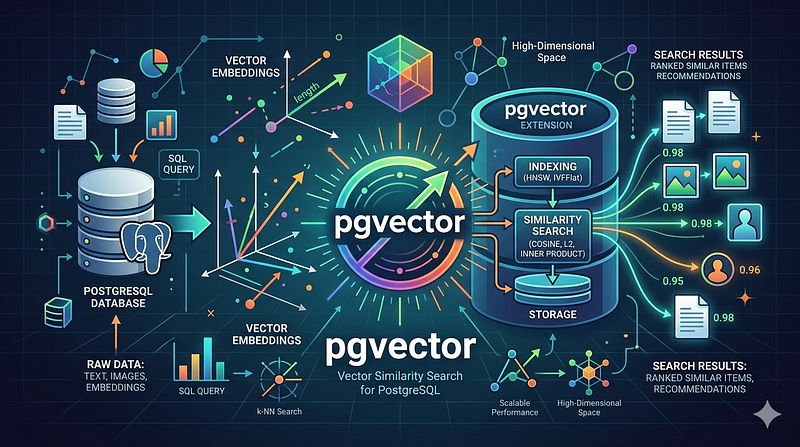
PentAGI deploys a multi-agent system inside a sandboxed Docker environment. There are four main agent roles: Orchestrator, Researcher, Developer and Executor. You give the system a target. The Orchestrator breaks the task into subtasks. The Researcher investigates, the Developer plans the approach, the Executor runs the tools. They pass context and findings between each other via a shared memory system backed by PostgreSQL with the pgvector extension.
The built-in toolset includes over 20 professional security tools: nmap for network discovery, Metasploit for exploitation, sqlmap for database attacks, plus a range of others. All tool execution happens inside isolated Docker containers, so operations are separated from the host system. The system produces detailed vulnerability reports with exploitation guidance at the end.
It supports multiple large language model providers as the reasoning backend: OpenAI, Anthropic Claude, Google Gemini, AWS Bedrock, DeepSeek, Ollama for local inference, plus custom configurations. It integrates with Grafana and Prometheus for monitoring, Langfuse for LLM observability. An optional Graphiti knowledge graph powered by Neo4j handles tracking of relationships between findings across tests.
This is a real, serious, well-engineered piece of software. The people who built it clearly know what they are doing.
Now About “Zero Human Input”
Here is the system architecture diagram from PentAGI’s own README:
👤 Security Engineer
      (User of the system)
            |
            | Uses HTTPS
            ↓
       ✨ PentAGI
The first box in their own diagram is a human. Specifically, a Security Engineer. The human is listed as the user of the system. This is not buried in the documentation. It is the opening node in the architecture overview.
“Zero human input” in the tweet means: once a human has installed Docker, configured the environment file with API keys for at least one LLM provider, set up PostgreSQL, configured the security settings, allocated a minimum of 2 vCPU and 4GB of RAM with 20GB of disk space, optionally configured Neo4j for the knowledge graph, pointed the system at a target they are authorised to test, then pressed go. Then the agents proceed without the human needing to click anything.
That is what zero human input means. The human has simply already done everything except the clicking.
This is not a criticism of PentAGI. Requiring setup is completely normal for sophisticated software. The criticism is of the framing that turns “the AI handles execution autonomously after configuration” into “zero human input.” These are different things. One is accurate. The other is the kind of claim that sounds impressive in a tweet and confusing in a boardroom when someone asks why the “zero human input” system needed a week of setup time.
To be fair to the README: it actually says “Security Engineer (User of the system)” and recommends a two-node architecture for production use with additional configuration. The README is honest. The tweet was doing its best.
The Agents Are Real Though
Let us give credit where it is due. The multi-agent architecture in PentAGI is genuinely interesting and not trivial to build.
The four-agent design (Orchestrator, Researcher, Developer, Executor) maps to how experienced human red teams actually divide work. Reconnaissance and target analysis, attack planning, execution and post-exploitation reporting are distinct skill sets that typically involve different people in a real engagement. PentAGI approximates that division in software.
The memory system is particularly well thought through. PentAGI maintains three types of memory:
Long-term memory stores knowledge and successful approaches across sessions in the vector database. If PentAGI successfully exploited a particular vulnerability type last week, it remembers that approach and can apply it to similar targets.
Working memory tracks the current task state, active goals and system resources during an active engagement.
Episodic memory logs past actions, their outcomes and patterns that worked well, building up a history of successful techniques.
The chain summarisation system manages context window limits intelligently, compressing older conversation history while preserving the most relevant recent context. This matters because a complex penetration test can generate enough tool outputs and agent reasoning to exceed even large context windows. The README documents that typical agent workflows consume around 64K tokens. PentAGI uses a 110K context window as a safety margin.
This is genuinely non-trivial engineering. Credit given.
“The Cybersecurity Industry Is About to Get Completely Disrupted”
PentAGI is ranked fourth in SOCRadar’s Top 10 AI Pentest Tools 2025 list. The tools above it on that list include Strix, PentestGPT and Cybersecurity AI (CAI). CAI alone supports over 300 AI models.
The category of AI-assisted and autonomous penetration testing already exists. It has multiple well-resourced players. Commercial platforms have been running variations of this architecture for longer than PentAGI has been public. The open-source release of PentAGI is a meaningful contribution to making these capabilities accessible without a vendor contract. That is genuinely good for the security community.
“The cybersecurity industry is about to get completely disrupted” is a different claim. Complete disruption implies the existing way of doing things stops working. Human penetration testers are not about to become irrelevant because a GitHub repository opened. PentAGI’s own documentation notes that users must “manage LLM costs and rate limits, especially on AWS Bedrock,” where the default rate limits for new accounts are described in the README as “extremely restrictive.” The primary model gets 2 requests per minute. At 2 requests per minute, a penetration test that would take a human team a day might take considerably longer, depending on complexity.
AI-assisted security testing is absolutely changing the field. The rate of change is real. The tools are getting better faster than most people expected. Calling any single open-source release the moment of complete disruption is the kind of thing that sounds good at 2am when you see a new GitHub repo and need to post something before the rest of your timeline does.
The Part Nobody Tweets About: The Legal Framework
There is a word for using a penetration testing tool against a target you do not have authorisation to test. That word is not “disruption.”
PentAGI’s README is explicit: the system is designed for “information security professionals, researchers and enthusiasts.” The system architecture assumes an authorised engagement. You define the target. You run the assessment. You read the report.
The “multiple AI agents that talk to each other to hack a target. zero human input” framing strips out the entire context of what legitimate penetration testing actually is. Authorised red team engagements are contractual. They have scope documents. They have rules of engagement. They have out-of-bounds systems that must not be touched. They have emergency contacts if something breaks.
None of that disappears because the execution layer is now handled by an AI agent instead of a human typing nmap commands into a terminal. The legal and ethical requirements for penetration testing apply to the engagement, not the tooling.
This matters for a different reason too. A tool like PentAGI that lowers the skill barrier for executing complex penetration testing tasks is genuinely useful for defenders and legitimate researchers. It is also a tool that can cause serious damage if used without authorisation. Both of these things are true simultaneously. The framing of “zero human input autonomous hacking” is the kind of description that makes responsible disclosure harder and panic easier.
What This Actually Means for Security Teams
The honest version of this story is more interesting than the disruption narrative.
Penetration testing as a profession has always had a shortage of experienced practitioners. A skilled red teamer who can chain together reconnaissance, exploitation and post-exploitation into a coherent attack narrative is expensive, rare and usually booked months in advance. Most organisations do a formal penetration test once a year, if at all, because the cost and availability constraints make more frequent testing impractical.
Tools like PentAGI change that equation in a meaningful way. Continuous automated assessment, where the AI works through a defined scope while the security team focuses on reviewing findings and fixing things, is a legitimate and valuable use case. Not as a replacement for human expertise in complex engagements, but as a force multiplier that makes frequent testing economically viable for organisations that could not afford it before.
That is the real story. Not “the industry is about to get completely disrupted by an autonomous AI hacker.” The real story is: “good security testing is about to get more accessible to smaller organisations that previously could only afford it once a year, which will make the overall security posture of the internet incrementally better.”
That is a good thing. It just does not fit in a tweet as well.
Should You Actually Look at PentAGI?
If you are a security professional running authorised assessments, yes. The architecture is well-designed, the documentation is detailed, the self-hosted model means your engagement data stays within your infrastructure. The support for multiple LLM providers means you can choose the cost and capability profile that fits your workflow. The knowledge graph integration with Graphiti and Neo4j for tracking findings semantically across engagements is a feature that commercial tools charge significant money for.
The minimum requirements are reasonable: Docker, 2 vCPU, 4GB RAM and 20GB disk. Most modern laptops qualify. The installer supports Linux, Windows and macOS.
If you are someone who read that tweet and thought “I can just point this at someone’s server and watch it go,” the answer is no. Not legally. Not ethically. The tool does not make that less illegal. It just makes the illegal thing more automated, which is not a feature in the context of unauthorised access.
If you are a security decision-maker wondering whether to allocate budget for AI-assisted testing: the technology is real, the use case is legitimate. This is a good time to understand the landscape. PentAGI is one option among several. Evaluate it alongside PentestGPT, CAI and commercial platforms with support contracts if your requirements include vendor accountability.
The Actual Summary

PentAGI is a well-built, open-source, multi-agent penetration testing platform. It automates the execution layer of a security engagement using AI agents running in a sandboxed Docker environment with over 20 professional tools. It requires setup, configuration, authorisation to test the target, plus at least one LLM API key. It is not zero-input. It is not the moment of complete industry disruption. It is a serious piece of software that makes authorised security testing more accessible and more automated.
It is also, frankly, the kind of project that makes the security community better by existing in the open. VXControl shipped real code, documented it honestly and put it on GitHub under a permissive licence. That deserves more credit than a hype tweet.
The tweet got more attention. The README deserved it.
Watch PentAGI in Action
Before you read the docs, watch it run. The official overview video shows the multi-agent system executing a real penetration testing workflow end to end.
It is worth four minutes of your time. The gap between “autonomous AI hacker” and “here is what it actually does in a sandboxed Docker environment” becomes very clear very quickly.
Useful Links
- GitHub Repository: github.com/vxcontrol/pentagi
- Official Site: pentagi.com
- YouTube Demo: PentAGI Overview Video
- Discord Community: discord.gg/2xrMh7qX6m