Making Home Services Simple: A Deep Dive into System Design
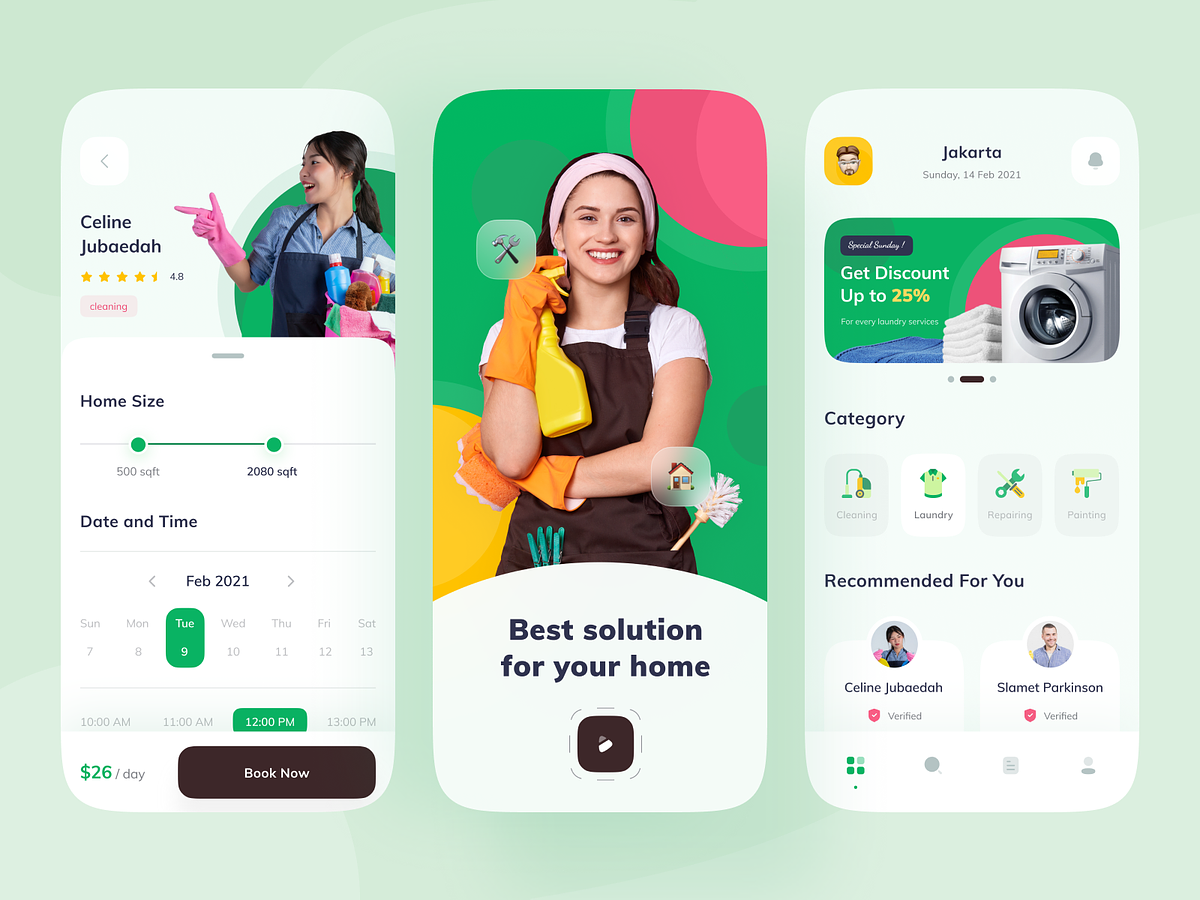
Convenience is king right?. Whether it’s cleaning your home, fixing a broken pipe or capturing the perfect wedding photo, there’s an ever-growing demand for services that make life easier. This demand has given rise to online home services marketplaces — platforms that connect users with verified professionals who can get the job done.
In this article, we’ll break down the essential components of designing a system for connecting customers with service providers, whether it’s for a spring clean, a pipe repair or capturing the magic of a wedding day.
Disclaimer: The calculations and design presented in this article are estimations and provide a rough design for educational purposes. Actual requirements may vary based on specific use cases, user behavior and system optimizations. It is recommended to conduct detailed analysis and testing tailored to your specific project needs.
Demand Statistics

The Growing Market for On-Demand Home Services
The online on-demand home services market has experienced significant expansion in recent years. Projections indicate that it will increase from $4.64 billion in 2023 to $5.29 billion in 2024, representing a robust compound annual growth rate (CAGR) of 13.9%. This growth underscores the rising consumer demand for convenient and accessible home service solutions, driving the market to new heights and highlighting its potential for continued expansion in the coming years.
Dublin, March 13, 2024 (GLOBE NEWSWIRE) -- The "Online On-demand Home Services Global Market Report 2024" report has…www.globenewswire.com
The global online on-demand home services market size was estimated at USD 3.71 billion in 2021 at a compound annual…www.grandviewresearch.com
This rapid growth is driven by several key factors:
- Convenience and Accessibility: The ease of accessing a wide range of services through digital platforms has made it incredibly convenient for consumers to find and book service professionals. Whether it’s through a website or a mobile app, users can quickly connect with verified professionals for various tasks.
- Diverse Service Offerings: Online home services marketplaces are not limited to just cleaning and maintenance. They offer a broad spectrum of services, including health and wellness, beauty, education and more. This diversification caters to the evolving needs of consumers, making these platforms a one-stop solution for many household and personal requirements.
- Digital Transformation: The increasing digitization and internet penetration, coupled with the widespread use of smartphones, have significantly propelled the demand for on-demand home services. Digital transformation has led to the rise of platforms and mobile applications that connect service providers with customers, offering a convenient and accessible way to book various home services.
Key Drivers of Demand
Several factors are driving the demand for online home services:
- Changing Consumer Lifestyles: Modern consumers lead busy lives and often lack the time to handle household chores and maintenance tasks. This has led to an increased reliance on professional services that can be easily booked online.
- Preference for Verified Professionals: Consumers prefer hiring verified and trusted professionals to ensure the quality and reliability of the services. Online home services marketplaces often provide detailed profiles, reviews and ratings of service providers, helping consumers make informed decisions.
- Subscription-Based Models: Many online home services platforms are adopting subscription-based models, offering memberships or service packages that provide regular or discounted services. This not only fosters customer loyalty but also ensures a steady stream of demand for service providers.
- Contactless Services: The COVID-19 pandemic has accelerated the demand for contactless services. Home service platforms have integrated features like online booking systems, digital payment gateways and protocols ensuring no-contact service execution, addressing the growing need for minimal physical interaction during service delivery.
Market Trends and Future Outlook
The online home services market is continuously evolving, with several trends shaping its future:
- Expansion of Service Offerings: Platforms and service providers are increasingly diversifying their repertoire of on-demand services. Beyond traditional offerings like cleaning and repairs, they are now catering to unique and specialized requirements such as pet care, wellness coaching, personal tutoring and fitness training.
- Increased Investment and Mergers: The online home services market is attracting significant investment from venture capitalists and private equity firms. Additionally, there is a trend of mergers and acquisitions as companies look to expand their service offerings and geographical reach. For example, Amazon’s acquisition of One Medical for $3.9 billion is a testament to the growing interest in the on-demand home services sector.
Requirement Gathering
The core of any successful system is meeting the user’s needs. In this case, both service seekers and professionals are the target users. Here’s how the system features typically looks:
User Management
- Registration/Login: Users can register using email, phone numbers or social media accounts. Service professionals need to provide additional information for verification.
- Profile Management: Users and service professionals can manage their profiles, including updating personal information, payment methods and preferences.
- Verification: Service professionals undergo a verification process, including identity checks and credential validation, to ensure they are qualified.
Service Browsing and Search
- Search Functionality: Users can search for services based on keywords, categories and location. Advanced filters allow sorting by ratings, availability and pricing.
- Service Categories: The platform is organised into categories for easy navigation.
Booking System
- Real-time Availability: Service professionals update their availability, which is reflected in real-time on the platform, ensuring users can book open slots instantly.
- Calendar Integration: Users can sync their bookings with their personal calendars for better appointment management.
Payment Processing
- Payment Gateway Integration: Secure payment gateways like Stripe or PayPal handle transactions, supporting multiple payment methods.
- Invoice Generation: Upon payment, the platform generates a digital invoice, which is emailed to the user and stored in their profile for future reference.
Ratings and Reviews
- Feedback System: After the service, users can rate the professional and leave a detailed review, which helps other users make informed decisions.
- Moderation: A moderation system filters inappropriate content and ensures that reviews are fair and unbiased.
Notifications
- Email/SMS Notifications: The platform sends automated notifications for booking confirmations, reminders and updates.
- Push Notifications: If the platform includes a mobile app, push notifications keep users informed of upcoming appointments and special offers.
Customer Support
- Help Centre: A comprehensive help centre with FAQs, guides and troubleshooting tips.
- Ticketing System: Users can submit support tickets for more complex issues, which are tracked and resolved by the support team.
Available Home Services at Launch
To provide a focused, high-quality experience, the marketplace should launch with a curated selection of services. These could include:
- Home Cleaning: General cleaning, deep cleaning, carpet cleaning and window cleaning.
- Plumbing: Leak repairs, pipe installations, drain cleaning and emergency plumbing services.
- Electrical Work: Installation of lighting fixtures, wiring, troubleshooting electrical issues and emergency repairs.
- Handyman Services: Minor repairs, furniture assembly, painting and small renovations.
- Appliance Repair: Repair services for common household appliances like refrigerators, ovens and washing machines.
- Photography: Event photography, portrait sessions and professional headshots.
- Gardening and Landscaping: Lawn mowing, garden maintenance and landscape design.
- Home Tutoring: Academic tutoring, language lessons and specialised skill instruction.
Customer Journey
Understanding the customer journey is crucial to designing a seamless user experience. Here’s a step-by-step look at how users might interact with the platform:
Discovery: The user lands on the homepage, possibly through a web search or an advertisement. They’re greeted with a clean, intuitive interface showcasing the available services.
Registration: The user can browse services as a guest but is encouraged to create an account to book a service. Registration is simple, requiring basic details like name, email and phone number. Users can also sign up using social media accounts.
Search and Filter: The user searches for the desired service using the search bar. They can filter results by factors such as service type, location, price range, ratings and availability.
Service Selection: The user selects a service provider based on profiles that include verified credentials, ratings, reviews and pricing. Each profile provides a detailed description of services offered, a gallery of past work and customer testimonials.
Booking: Once a service provider is chosen, the user selects a date and time from the provider’s available slots. The platform provides a real-time calendar to ensure smooth scheduling.
Payment: The user is prompted to make a payment through a secure gateway. They can choose from various payment methods, including credit/debit cards, digital wallets and mobile payments.
Confirmation and Notification: Upon successful booking and payment, the user receives a confirmation via email and SMS. Notifications include reminders as the appointment date approaches.
Service Delivery: On the scheduled date, the service professional arrives at the user’s location and completes the task. The platform allows users to track the professional’s arrival in real-time.
Rating and Review
After the service is completed, the user is prompted to rate and review the professional. This feedback is vital for maintaining quality on the platform.
Customer Support: If the user encounters any issues during the process, they can easily access customer support via chat, email or phone.
Non-functional Requirements
Beyond functionality, non functional requirement are also important for the system to maintain and running smoothly. Here are the basic non functional requirements :-
- Scalability: The platform should scale to handle increasing user loads without degrading performance.
- Security: Robust encryption and data protection protocols to safeguard sensitive information.
- Reliability: High availability with minimal downtime, supported by redundant systems.
- Performance: Fast load times, responsive interfaces and smooth transitions between pages.
- Compliance: Adherence to local regulations, including GDPR for data protection.
System Methodology

To ensure the system meets these requirements, an Agile development methodology is recommended. Agile allows for iterative development, enabling continuous feedback, quick adjustments and ongoing improvements. Each sprint could focus on developing specific features, from user registration to the booking system, with regular reviews and user testing to ensure alignment with business goals.
Data Fact Figure and Calculation
To estimate the initial data requirements for the platform, we start by considering the number of users and the average data generated by each user. Here’s a more detailed breakdown:
- User Base: Let’s assume an initial user base of 5,000, including both customers and service professionals.
- Profile Data: Each user profile, including basic details, preferences and history, might take up approximately 1MB of storage. For 5,000 users, this equals approximately 5GB of storage.
- Transactions: If each user books 2 services per month, this results in 10,000 transactions monthly. Each transaction might generate about 200KB of data, including details like booking information, payment records and associated media. This adds up to around 2GB of storage.
- Service Listings: Assuming an initial offering of 100 service professionals and if each service professional creates an average of 10 service listings, with each listing requiring around 500KB of data, the total storage needed for listings would be 500MB of storage.
- User-Generated Content: This includes ratings, reviews and messages. If each user contributes 500KB of content monthly, this results in an additional 2.5GB.
Total Estimated Storage Requirement:
- User Profiles: 5GB
- Service Listings: 500MB
- Bookings and Transactions: 2GB
- Reviews and Ratings: 2.5GB
Total Starting Data: Combining all these factors, the platform might initially require around 10GB of storage per month. This will increase as the user base and activity levels grow.
Storage Requirement
Given the initial estimate of 10GB of data for 5,000 users, the platform needs a scalable storage solution that can handle growth and provide efficient data retrieval.
Storage Types
- Relational Database Storage: For structured data like user profiles, service listings and transactions, a relational database such as PostgreSQL or MySQL is suitable. This data is typically stored on SSDs for fast access and query performance.
- File Object Storage: For storing unstructured data like user-generated content (photos, documents), cloud-based object storage such as Amazon S3 or Cloudflare R2 is ideal. This type of storage is scalable, cost-effective and supports large volumes of data.
Initial Storage Allocation
- Database Storage: Start with an allocation of around 50GB to accommodate the 10GB of estimated data, allowing room for growth, indices and backups.
- File Object Storage: Allocate around 100GB initially, considering the potential need for storing images, documents and other user-uploaded files. This will cover the needs for storing service photos, user avatars and other multimedia content.
Scalability Considerations
As the platform scales, it’s crucial to implement automatic scaling and data partitioning to handle increasing storage demands without degrading performance. Regular monitoring and scaling of the storage infrastructure will be necessary to ensure consistent service quality.
Server Requirement and Calculation
When estimating the initial data requirements, this section expanded detail should provide a clearer understanding of the storage and server requirements, helping to plan infrastructure efficiently while supporting scalability and performance.
Estimating the number of servers needed involves calculating the expected load. Here’s a basic approach:
Web Servers
To calculate the number of web servers needed, consider the following:
- User Load: If the platform expects 5,000 users at launch, with 100 concurrent users at peak times and each session generates approximately 10 requests, the platform must handle 1,000 requests per second.
- Server Capacity: A typical web server can handle around 500–1,000 requests per second, depending on the server specifications and the complexity of the requests. Starting with 1–2 servers should comfortably handle the initial load, with the ability to scale up as traffic increases.
Database Servers
- Primary-Replica Setup: Implement a primary-replica configuration to handle write operations on the primary server and distribute read operations across one or more replica servers. This setup not only ensures high availability and data redundancy but also optimizes load distribution. To handle high transaction volumes and large data sizes efficiently, use a high-performance server equipped with SSD storage and high IOPS capabilities.
- Caching: As the database expands, incorporate caching solutions like Redis to enhance performance and scalability. Caching frequently accessed data reduces the load on the database and accelerates response times.
Load Balancers
- Load balancers distribute incoming traffic evenly across web servers, ensuring no single server becomes a bottleneck. This improves reliability and performance. Implement load balancers with health checks to automatically reroute traffic from failing servers to healthy ones.
Auto-Scaling
- Use auto-scaling groups to automatically adjust the number of servers based on real-time demand. This ensures the platform can handle varying loads without over-provisioning resources, optimising costs.
Content Delivery Network (CDN)
- A CDN like Cloudflare distributes static content like images across multiple edge locations globally, reducing latency and improving load times for users regardless of their location.
High-Level Architecture
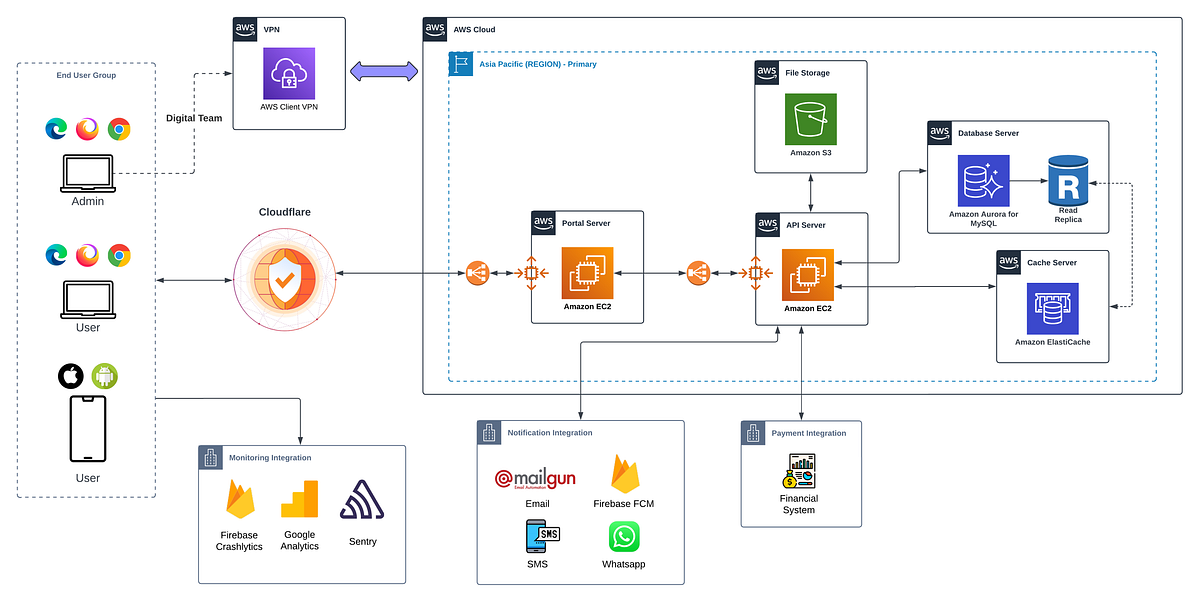
Designing a robust and scalable architecture for an online home services marketplace involves several key components:
Frontend
- User Interface (UI): Built using modern JavaScript frameworks like NextJS or VueJS, the frontend should be highly responsive, offering a seamless experience across devices and responsiveness. This includes intuitive navigation, fast-loading pages and clear and accessible service listings.
- SSR or CSR: For faster interactions and dynamic content loading, CSR can be employed, especially for logged-in users interacting frequently with the platform. For SEO perspective, SSR could be better utilization.
Backend
- Decoupled Architecture: A decoupled architecture separates the platform into loosely connected components (Backend and Frontend) that operate independently. This approach allows for updating and scaling individual components without impacting the entire system.
- RESTful APIs: RESTful APIs facilitate communication between the frontend and backend services. They are chosen for their simplicity and broad compatibility. These APIs are responsible for interfacing with third-party resources and managing application logic.
Database Layer
- Relational Databases: Services like PostgreSQL or MySQL are used for structured data, with a focus on ACID compliance to ensure data consistency and integrity, particularly for critical operations like payments and bookings.
- NoSQL Databases: MongoDB are suitable for handling unstructured data, such as logs, user activity streams and search queries, providing flexibility and scalability.
Security
- Authentication and Authorization: Implement OAuth2.0 for secure user authentication and use role-based access control (RBAC) for managing permissions across different user types.
- Encryption: All sensitive data should be encrypted in transit and at rest using necessary algorithm. Regular security audits and vulnerability assessments are essential to maintain high security standards.
Cloud Infrastructure
- Containerisation: Using Docker for containerising services ensures consistency across development, testing and production environments. Kubernetes (K8s) can be employed for orchestrating containers, managing deployments, scaling and maintaining service availability.
- CI/CD Pipeline: Continuous Integration and Continuous Deployment (CI/CD) practices, facilitated by tools like Jenkins or GitLab CI, streamline the process of code integration, testing and deployment, reducing the time from development to production.
Monitoring and Logging
- Real-time Monitoring: Tools like Sentry provide real-time monitoring of system performance, helping identify bottlenecks or failures. Alerts can be configured for anomalies in system metrics.
- Centralised Logging: Implement centralised logging with tools like Sentry, ELK or Splunk to aggregate logs from different services, making it easier to diagnose issues.
This high-level architecture ensures the platform is scalable, resilient and secure, capable of supporting a growing user base and evolving service offerings.
Overall Cost Estimation
Estimating the overall cost of developing and maintaining an online home services marketplace involves various factors:
Development Costs
- Frontend and Backend Development: Depending on the complexity of the features and the technology stack chosen, development costs can range from $125,000 to $375,000. This includes design, coding, testing and initial deployment. Costs may be higher if you opt for custom designs or advanced functionalities like AI-driven recommendations or predictive analytics.
- Integration Development: Building and maintaining integration with third-party services, could add $25,000 to $60,000 to the overall budget.
Infrastructure Costs
- Cloud Hosting: Initial cloud hosting on based on budget (AWS, Azure or Google Cloud) might start at around $4,000 per month, covering server instances, databases, storage and network traffic. As the platform scales, these costs will increase proportionally, potentially reaching $6,000 to $10,000 per month as the user base grows.
- Content Delivery Network (CDN): Implementing a CDN to optimise content delivery could add another $500 to $1,500 per month, depending on the volume of traffic and geographical distribution of users.
- Auto-Scaling and Load Balancers: The cost for auto-scaling and load balancers, crucial for handling traffic spikes, might be around $1,000 to $2,000 per month initially.
Operational Costs
- Ongoing Maintenance and Updates: Regular updates, security patches and feature enhancements typically require a dedicated team, with monthly costs ranging from $5,000 to $15,000.
- Customer Support: Setting up a customer support team, including tools and platforms for chat and ticketing systems, might incur monthly costs of $5,000 to $15,000, depending on the scale of support required.
Marketing and User Acquisition
- Initial Marketing Campaigns: To attract users and service professionals, an initial marketing budget of $20,000 to $40,000 is recommended. This includes digital marketing, content creation and promotions.
- Ongoing Marketing: To sustain growth, ongoing marketing efforts could require $12,000 to $24,000 per month, covering SEO, PPC campaigns and social media marketing.
Legal and Compliance Costs
- Regulatory Compliance: Ensuring the platform complies with data protection laws and other local regulations might involve legal fees of $12,000 to $36,000. Regular audits and updates to privacy policies will incur additional costs over time.
Total Cost Estimation: Combining these factors, the total initial cost could range from $200,000 to $500,000, with ongoing monthly costs of $30,000 to $60,000. This estimate covers the basics, but additional features or more aggressive scaling could increase costs.
How to Monetise

Monetising an online home services marketplace involves implementing strategies that generate revenue while providing value to both service professionals and customers. Here are several effective monetisation methods:
1. Service Fees
- Commission on Transactions: Charge a commission on each transaction that occurs through the platform. For example, you might take a 5–10% fee from the total cost of the service booked by a customer.
- Booking Fees: Alternatively, charge customers a small booking fee in addition to the service price. This fee could be a flat rate or a percentage of the service cost. It covers the costs associated with processing payments and managing bookings.
2. Subscription Plans
- For Service Professionals: Offer subscription plans to service professionals for premium access to the platform. These plans could include benefits like higher visibility in search results, access to exclusive leads and enhanced profile features. For example, a basic plan might be free, while a premium plan could cost $20-$50 per month.
- For Customers: Consider offering subscription packages to customers, especially for regular users who frequently book services. These subscriptions could provide perks such as discounts, priority booking or loyalty program services.
3. Advertising and Promotions
- Sponsored Listings: Allow service professionals to pay for sponsored listings, which appear at the top of search results or in prominent positions on the platform. This model is similar to Google Ads, where businesses pay to be featured more prominently.
- Banner Ads: Integrate banner ads or native advertising within the platform. These could be ads for related products or services, such as home improvement tools, cleaning supplies or insurance. Ad placements could be sold directly to advertisers or managed through ad networks like Google AdSense.
4. Lead Generation Fees
- Charge Per Lead: Service professionals pay for leads (potential customers) generated by the platform. This model involves charging a fee each time a service professional receives a contact or inquiry from a potential customer. This fee could be a flat rate or vary based on the service category and lead quality.
5. Partner Programs
- Affiliate Marketing: Partner with related businesses, such as home improvement stores, tool rental companies or insurance providers and earn a commission on referrals. For example, you could earn a percentage of sales when customers purchase products or services through links on your platform.
- Service Bundling: Offer bundled services in partnership with other companies. For example, you could collaborate with a moving company to offer a combined package of cleaning, moving and handyman services at a discounted rate, sharing the revenue with the partner.
These monetisation strategies offer multiple avenues for generating revenue while ensuring the platform remains attractive and valuable to both service professionals and customers. The key to successful monetisation is balancing profitability with user satisfaction, ensuring that fees and charges are fair and transparent.
Best Practices
When building and maintaining the platform, adhering to best practices ensures long-term success:
- User-Centric Design: Always prioritise the user experience. Regularly collect feedback and make improvements based on user needs.
- Scalable Architecture: Design the system to scale seamlessly as user numbers grow, preventing performance bottlenecks.
- Data Privacy and Security: Implement stringent data protection measures to safeguard user information. Regularly update security protocols to counter emerging threats.
- Continuous Integration and Deployment (CI/CD): Adopt CI/CD pipelines for faster, more reliable updates and rollbacks when necessary.
- Customer Support: Invest in a robust customer support system that can handle queries efficiently and improve user satisfaction.
Conclusion
Building an online home services marketplace is a complex but rewarding venture. By focusing on user needs, investing in scalable technology and adhering to best practices, you can create a platform that not only meets current demand but is also poised for future growth. As the digital marketplace for home services expands, having a solid foundation will be the key to success.
Thank you for reading! Don’t forget to subscribe to stay informed about the latest updates in system design and e-commerce innovations. Happy designing!
If you found this article insightful and want to stay updated with more content on system design and technology trends, be sure to follow me on :-
Twitter: https://twitter.com/hafiqdotcom
LinkedIn: https://www.linkedin.com/in/hafiq93
Buy Me Coffee: https://paypal.me/mhi9388 /
https://buymeacoffee.com/mhitech