How fake data breaches became the sharpest tool in the information warfare playbook
There is a peculiar kind of attack happening more frequently in the cybersecurity world, and most people do not recognise it for what it is. A post appears on a breach forum. Someone claims to have stolen millions of records from a bank, a telecom company or a government platform. A sample of data is attached to prove it. Screenshots circulate on Twitter within hours. Journalists pick it up. The company’s customer service lines light up. The stock takes a dip. The brand takes a hit.
Then, a few days later, a quiet investigation reveals the data was largely fake. Dummy accounts. Recycled public records. Fields that do not match the company’s actual systems. The “breach” never happened.
But here is the uncomfortable truth: by the time that correction surfaces, the damage is already done.
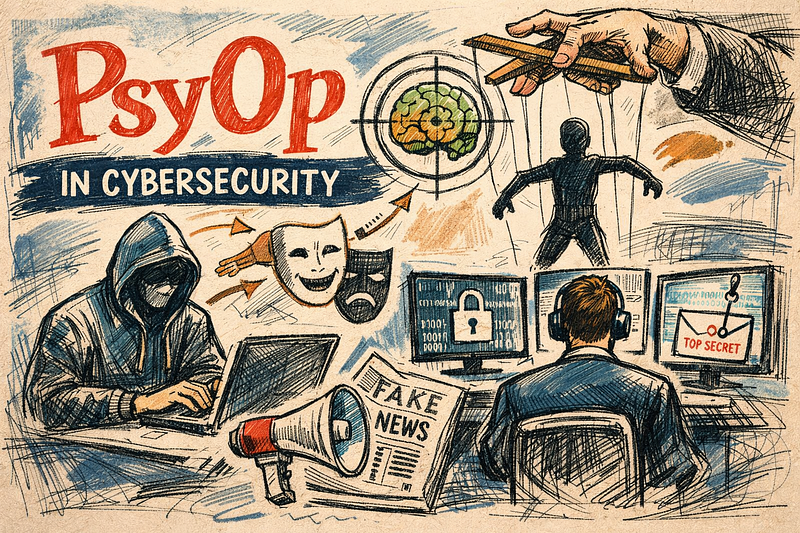
This is not hacking in the traditional sense. There is no ransomware, no exploited vulnerability, no data exfiltration in the dead of night. What this is, more accurately, is a PsyOp, and it is becoming one of the most cost-effective weapons available to bad actors in the digital age.
The Shift: From Data Theft to Perception Control
Traditional breaches are expensive. Attackers need access, persistence, exfiltration pipelines and a way to monetise stolen data. That takes time, skill and a much higher risk of getting caught.
A fake breach flips the equation entirely.
Instead of attacking infrastructure, the attacker targets perception. No need to bypass security controls. No need to maintain access inside a network. No need to sell or package real data. All that is required is a believable story, and in today’s environment, that is often enough to produce measurable damage.
Compare the cost to the attacker against the cost to the target. The attacker needs a forum account, a synthetic dataset and a few hours. The target needs a full incident response investigation, legal review, public communication and ongoing monitoring. The asymmetry is the point.
The attacker’s total investment is an afternoon. The target’s response can take weeks and cost millions.
PsyOps Is Not a New Concept. The Target Has Changed.
The term “psychological operations” or PSYOP has military origins. It refers to planned efforts to influence the perceptions, emotions and behaviour of a target audience, not through direct force, but through information. The goal is to shape how people think and what they believe, often without them knowing they are being influenced at all.
For decades, the concept was considered the domain of nation-states and intelligence agencies. In December 2025, U.S. Secretary of Defense Pete Hegseth signed a directive to formally restore the term “PSYOP” within the military, replacing the softer label “Military Information Support Operations” that had been in use since 2010. The directive noted that PSYOP more accurately reflects what these operations actually are: efforts to influence the emotions, motives and reasoning of foreign audiences.
In cybersecurity, the same framework now applies to corporate and financial targets. Except the audience is not a foreign government. It is you, the customer.
The Anatomy of a Fake Breach
One of the clearest recent examples of this playbook in action involves Max Messenger, a Russian messaging platform. In late 2025, a threat actor posting under the alias “CamelliaBtw” claimed on DarkForums to have fully compromised Max Messenger’s infrastructure, alleging the theft of 15.4 million user records totalling 142 GB of data.
The post spread quickly. Security researchers flagged it. News outlets covered it. Users panicked.
Then the technical examination began. Max’s security team pointed out that the architecture described in the post did not match their actual infrastructure. The threat actor described foreign cloud storage that Max does not use. The post referenced bcrypt password hashes, but Max confirmed it does not use bcrypt for password storage at all. Within days, the actor admitted the breach was entirely fabricated.
No breach. No stolen data. Just a forum post and a story that moved faster than the truth.
A CyberSecureFox analysis noted that the case fits “a broader trend where fake leaks and staged hacks are used as tools of information pressure, extortion or simple attention-seeking.” The same analysis warned that even after debunking, these posts leave lasting impressions. Users who saw the breach claim may never see the correction.
The same script played out closer to home in the financial sector. On March 3, 2026, a threat actor using the handle “datasource” posted on BreachForums.as claiming to sell a dataset of approximately 1.2 million CIMB Bank Malaysia customer records, allegedly containing names, bank account numbers, card information, mobile numbers, gender and dates of birth. The cybersecurity monitoring platform VECERT Analyzer flagged it as a critical financial data breach and the alert spread quickly across security communities.
CIMB responded the following day on X. The bank stated the claims were false, confirmed no data leak had occurred and said its security teams had verified all systems were secure. A cybersecurity consultant reviewing the dataset noted that the data appeared to have been scraped from other unrelated leaks rather than sourced from a fresh compromise, and that the threat actor had no known prior track record. No independent forensic evidence has emerged to verify the claims.
The outcome matched the playbook precisely. The claim circulated. The bank denied it. The denial attracted its own coverage. Customers asked questions. And the correction had to work harder than the original allegation.
It is also worth noting that the perception-reality gap does not only exist in fully fabricated cases. Even confirmed, real breaches show the same dynamic at work. The MOVEit Transfer vulnerability in 2023 is a useful reference point. The technical exploit was real, but what made it so damaging over such a long period was the cascading wave of disclosures and speculation that followed. Each new announcement extended the story and kept the public sense of risk growing well beyond any single company’s exposure.
The Snowflake customer data incidents of 2024 produced a similar pattern. Attackers accessed customer accounts using stolen credentials rather than breaching Snowflake’s own infrastructure. That distinction mattered enormously from a technical and legal standpoint. It mattered far less to the public. Early narratives blurred the line between platform compromise and customer misconfiguration, and the confusion stuck. The gap between what actually happened and what people believed had happened became, functionally, the damage itself.
That gap is exactly where perception-first attacks are designed to operate.
The Playbook: Five Moves That Make It Work
A well-executed fake breach follows a recognisable structure, and understanding the mechanics of it helps explain why it is so effective.
Step one: Post on the right forum.
Breach forums like BreachForums carry a kind of dark credibility. A listing there signals “this is real” to a wide audience of journalists, researchers and security professionals. The FBI seized and dismantled BreachForums in late 2025, but copycat forums emerged almost immediately. The infrastructure of credibility is hard to permanently destroy.
Step two: Include sample data.
Even if the data is synthetic, scraped from public sources or recycled from older leaks, a convincing-looking sample gives journalists and researchers something to screenshot and publish. Resecurity researchers documented in detail how synthetic datasets can be constructed to appear authentic, using combinations of real PII from older breaches mixed with generated records to create something that passes a quick inspection.
Step three: Let media do the rest.
You do not need to reach every customer directly. You just need one wire service pickup or one major tech outlet to run the story. From there, social media amplifies it for free.
Step four: Wait for the denial.
When the targeted company denies the breach, it reads as defensive to the public. “Of course they’d say that” is a natural response. Denials rarely undo the initial damage.
Step five: Move on.
The attacker faces no consequences because there was no actual breach. No law was technically broken in many jurisdictions. The post gets deleted or buried. The actor creates a new alias.
Why Banks and Financial Institutions Are the Perfect Target
Trust is the only real product a bank sells. Everything else, the accounts, the loans, the investment products, depends entirely on the customer’s belief that the institution is secure, honest and competent. When that belief is shaken, it does not take a court verdict to cause damage. It takes a tweet.
Research published in the Journal of Banking Regulation found that firms lose an average of $309 million in market value on the day a cyberattack is reported. That figure is for confirmed attacks. Imagine the volatility created by an unconfirmed claim that the company then denies.
The 2024 National Public Data breach illustrates the financial and reputational consequences at scale. The breach exposed an alleged 2.9 billion records across the U.S., UK and Canada. Within weeks, over fourteen class-action lawsuits had been filed. By December 2024, National Public Data had filed for bankruptcy and shut down entirely. The company never recovered from the reputational impact, regardless of whether every record in the alleged dataset was legitimate.
For banks specifically, the risk is amplified. Customers move money quickly when they feel exposed. Regulatory scrutiny follows any public breach claim. Competitors circle. And in markets where multiple providers offer similar products, fear of insecurity is enough to drive customers to switch without ever waiting for confirmation.
A rumour of a breach travels faster than a denial. And once it lands, no amount of technical proof fully dislodges it.
The 0APT Lesson: Extortion Without a Breach
The fake breach playbook has evolved beyond pure reputation damage. Threat actors have learned to weaponise uncertainty for direct profit.
The 0APT group, labelled a likely scam operation by threat intelligence firm Kela, sent extortion demands to companies claiming to have stolen sensitive data. When targets investigated, they found no evidence of intrusion. In multiple documented cases involving State Farm Insurance and NTT Docomo, the datasets turned out to be entirely fictitious. Yet the companies still had to spend time and resources on incident response before they could arrive at that conclusion.
This is a refined version of the strategy. Uncertainty, it turns out, is its own form of leverage. Why go to the trouble of actually hacking a company when you can send a ransom demand, reference a fake dataset and collect payment from an organisation that cannot quickly verify whether the threat is real? As BankInfoSecurity reported, even groups exposed as fraudulent caused genuine operational disruption simply through the act of making the claim.
AI Just Made This Attack 10x Cheaper
What makes this moment different from earlier periods of disinformation is the role of artificial intelligence in lowering the cost and raising the sophistication of these attacks.
Generating convincing synthetic datasets once required skilled data engineers. Today, a competent prompt and a modest AI tool can produce thousands of records that look plausible enough to fool a quick inspection. The Resecurity analysis noted that attackers are increasingly mixing synthetic records with real stolen data from older breaches to increase the perceived legitimacy of their fake dumps.
Deepfakes add another layer. A report by Cyble noted that Deepfake-as-a-Service exploded in 2025, creating commoditised tools that non-technical actors can use to produce fake evidence of breaches: forged screenshots of database interfaces, fabricated chat logs showing exfiltration activity or artificial video “proof” of access to internal systems.
PwC’s 2026 Global Digital Trust Insights report flagged the convergence of disinformation and AI as one of the primary emerging threat vectors for financial institutions. As AI systems automate the amplification of content, a false narrative released at the right moment can propagate across channels faster than any correction team can respond.
Orange’s Security Navigator 2026 report described this directly: cybercrime is now industrialising and sitting at the epicenter of geopolitical dynamics. The tools that once belonged to state intelligence services are being packaged and sold to anyone with the motivation to use them.
This Has a Name. It Is Not Just Hacking.
Security professionals have increasingly adopted the term “cognitive warfare” to describe this category of attack. It refers to operations that target human perception and decision-making rather than technical infrastructure. The goal is not to destroy data or disrupt systems; it is to corrupt confidence in the integrity of an institution.
A paper published in Bulletin of the “Carol I” National Defence University described cognitive warfare as the deliberate erosion of societal resilience through the manipulation of information ecosystems, targeting not just what people know but how they evaluate trustworthiness itself.
When applied to the private sector, particularly to banks and financial platforms, this becomes a commercially viable weapon. The costs to the attacker are minimal. A forum account, a synthetic dataset and a few hours of effort. The costs to the target can run into hundreds of millions of dollars in market cap, plus the softer but equally damaging loss of customer confidence.
What Comes Next
The financial sector saw a 71% increase in cyber extortion attacks in 2025, according to data compiled by Jack Henry’s 2026 cybersecurity trends report. Not all of those attacks involved real data. The line between genuine breach and fabricated breach claim is increasingly blurred, and that ambiguity is the point.
Most organisations are built to defend against real breaches: firewalls, intrusion detection, monitoring, incident response. Those capabilities are still necessary. But they are not sufficient for this category of attack, because the attack does not happen inside the network. It happens outside, in public perception. That requires a different kind of preparation.
1. Treat narrative as part of security.
Security teams and communications teams need to coordinate before an incident, not scramble toward each other after one. A delayed or unclear response to a fake breach claim can amplify the damage more than the claim itself. Speed and clarity matter as much as technical accuracy.
2. Monitor breach forums and social channels continuously.
Early detection changes everything. If a false listing is spotted within hours, response time improves dramatically. Waiting until the claim is trending is already too late.
3. Educate users on how to verify claims.
An informed user base is harder to manipulate. Users should know where official breach announcements come from, what the company’s real communication channels are and why not every dark web listing represents a real compromise.
4. Prepare specific response playbooks for fake breach scenarios.
Most incident response plans assume a real intrusion. There should be parallel plans for false breach claims that include rapid data authenticity verification, coordinated denial messaging and pre-drafted public statements.
For the public, the ask is harder. It requires a degree of disciplined scepticism: holding judgement until verification and understanding that breach forum ecosystems are not neutral channels. Actors with agendas, from competitive saboteurs to nation-state-aligned groups to simple grifters looking for extortion payouts, all post there.
The uncomfortable reality is that in the information warfare era, you do not need to breach the database. You just need to convince enough people, even temporarily, that you did. The technical infrastructure stays intact. The reputation takes the hit.
And in a business where reputation is the infrastructure, that is enough.
So the next time a breach claim surfaces, the most useful question to ask is not just “did this system get hacked?” A sharper question is this: who benefits if people believe this happened?
That shift in thinking matters. Because not every breach is about data. Some are about doubt. And doubt, placed correctly, can be just as powerful as any real exploit.
A Quick Terminology Reference
For readers who want the precise vocabulary:
Disinformation / False Data Breach Claim covers the deliberate spread of fabricated or misleading breach information with the goal of generating panic or media coverage.
Reputational Sabotage is the business-focused term, targeting customer trust rather than technical systems.
Fake Leak / Fabricated Breach Listing refers specifically to the dark web tactic of posting synthetic or recycled data as though it were stolen.
PsyOps (Psychological Operations) is the strategic framing: deliberate manipulation of public perception at scale, with downstream effects on behaviour and confidence.
Cognitive Warfare is the broader academic and military term for operations targeting human decision-making systems rather than technical ones.
None of these are hypothetical categories. They are happening now, on forums that anyone with a browser and a VPN can access. The targets are real companies with real customers. The weapon is your belief.
Sources
- CIMB Dismisses Online Claims of 1.2 Million Customer Records Leak | Fintech News Malaysia
- CIMB Refutes Claims Of Data Breach Involving 1.2 Million Records | BERNAMA
- CIMB Denies Data Breach Involving 1.2mil Records | Free Malaysia Today
- Hegseth issues directive to bring back ‘psyop’ terminology | DefenseScoop
- Pentagon PSYOP Directive, December 2025 | U.S. Department of Defense
- Max Messenger: A fake data breach with genuine consequences? | Barracuda Networks
- Fake Max Messenger Hack On DarkForums: How To Spot A False Data Breach | CyberSecureFox
- Hacker Claims Full Breach of Russia’s Max Messenger (Update: Fake Breach) | HackRead
- Synthetic Data: A New Frontier for Cyber Deception and Honeypots | Resecurity
- Fake Out: 0APT Data-Leak Ransomware Group Branded a Scam | BankInfoSecurity
- 2024 National Public Data breach | Wikipedia
- Stock market effects of major cyber-attacks | Journal of Banking Regulation
- United States Leads Dismantlement of BreachForums | U.S. Department of Justice
- Deepfake-as-a-Service Exploded In 2025: 2026 Threats Ahead | Cyble
- Cognitive Warfare as a Strategic Domain | Bulletin of “Carol I” National Defence University
- Security Navigator 2026 | Orange Group
- Cybersecurity Outlook: 2026 Global Digital Trust Insights | PwC
- Top Cybersecurity Trends for 2026 Every Financial Leader Must Know | Jack Henry
- PsyOps in Cybersecurity and the New Challenges of Regulatory Compliance | Solutions Review
- Data As A Weapon: Psychological Operations In The Age Of Irregular Information Threats | Irregular Warfare Center